

I want to tell you about a very important meeting that I missed.
It was the day our first son was due to have his ultrasound. I’d arranged to leave work early so I could be with my wife, Merle, at the hospital. And then, as I was thinking of leaving, something at work came up. It felt urgent. It felt like the sort of thing only I could sort out.
So that’s what I did. I convened the meeting at work, and we sorted the problem out. Then I went to the hospital for the ultrasound.
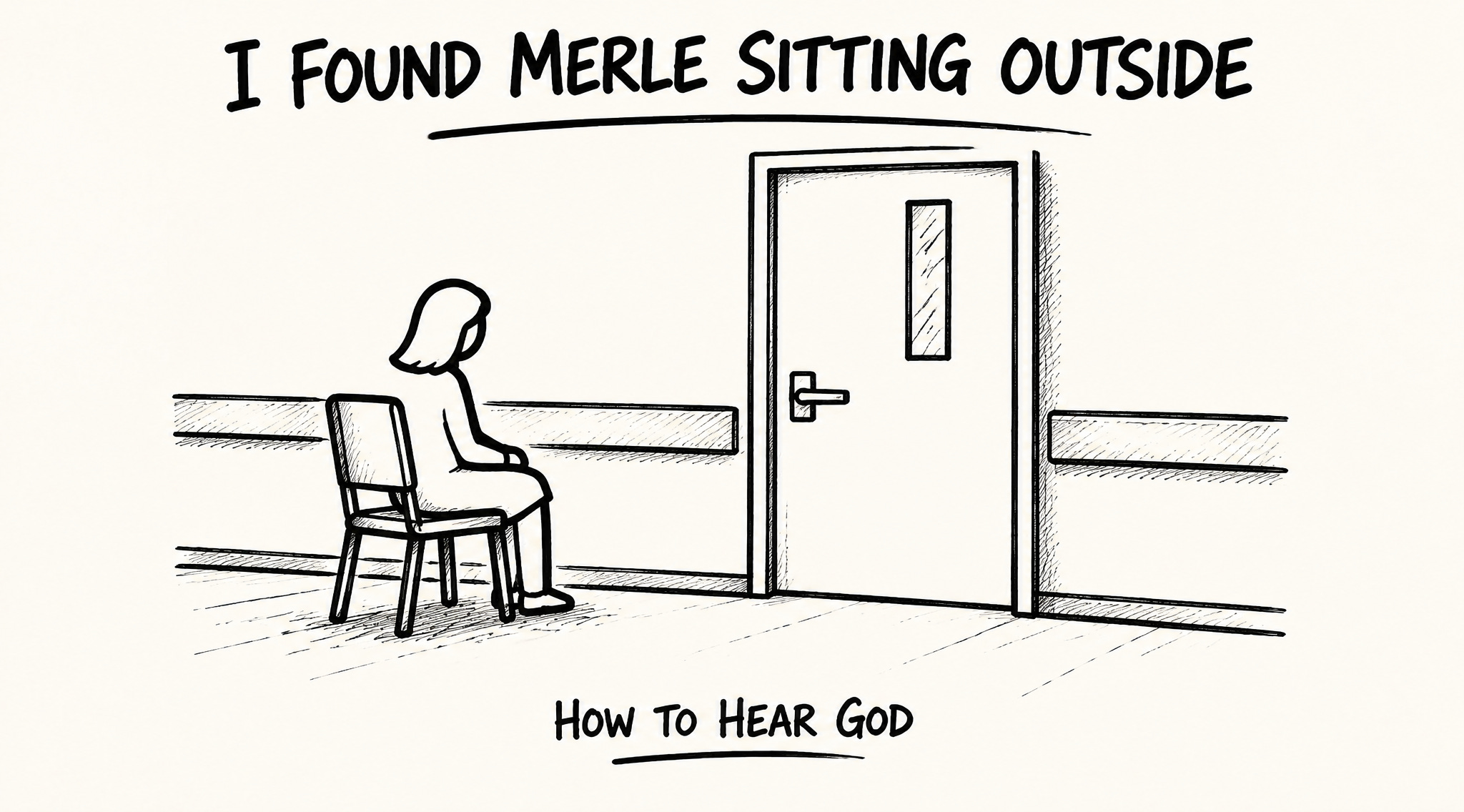
And I found Merle sitting outside. She’d already had the ultrasound, without me.
She said, “It’s all right. I forgive you.” And she meant it. She’s lovely like that.
That was 30 years ago, and there isn’t a day I don’t regret that decision.
Here’s the strange thing. I can’t tell you what the project was. I can’t tell you who was even in the meeting. I can’t even tell you what the emergency was. But I can still see Merle’s eyes looking at me.
A friend of mine later gave me a great test for deciding what to do when I’m stuck between two things. It’s this: in a year’s time, which of these two things will matter?
I wish I’d had that question on the day of the ultrasound. Nobody remembers that emergency fix. But Merle and I both remember the hospital.
EVERY HAVE TO WAS GOOD
You’re torn between a pile of have tos, and every one of them is good.
You have to be a good mum or dad. You have to be a good husband or wife. You have to be a good person at work. You have to do your job in church correctly. You haven’t even got to the rest of the list yet.
I want to be honest about what I mean by tired. I don’t mean that working hard is the problem. For me it was the weight and pressure of have to.
Every one of my have tos was a good thing. But put together, they became a life that was never going to stop.
Let me tell you about the year mine caught up with me, and how I came back from it.
I WAS BUSY WITH THINGS I LOVED
It was 2004. Our boys were eight and six. I was working full time, with a forty-minute drive each morning to an office in Leeds. At church I was a house group leader, I preached now and then, and I was on the worship team. For two and a half years during that period I’d also led the worship team.
I loved all of it. That’s what made it so hard to see. If you’d asked me then whether I was overdoing things, I’d probably have said I was just busy, like everyone else.
I PRAYED FOR SOMEONE AND FELT COMPLETELY EMPTY
It was a Sunday morning at church. I always offer to pray for people after a meeting, and I have a line that I use: “I can’t guarantee God will heal you, but I can guarantee we will pray for you. And we’ll ask the Holy Spirit to come.”
It was just one of those after-church moments. Really, I wanted to leave and go home. But someone needed prayer, and I wanted to pray for them.
And as I prayed, I felt completely empty.
I didn’t have any emotions. I just felt very tired. I even wondered whether I was almost trying to manipulate it, because if I’m really on empty, can I make it up? I didn’t want to let the person down.
So I prayed for them honestly. But I felt completely crushed inside, and I wanted to get home and go to bed.
That Sunday, thankfully, I didn’t have any evening commitments. We went home, and I just crumpled. I felt numb. All I really wanted was to be on my own and close down all my senses. I also felt I somehow wanted to be away from God as well.
I realised I was completely dry. My warning light never came on, or I didn’t see it.
RECOVERY STARTED WHEN I ADMITTED MY LIMITS
The next day I had to get up early and drive to Leeds. I tried to do what I normally do on the drive, which is listen to a sermon or some music, but nothing was working. I realised I was at rock bottom and bouncing on the bottom. I hadn’t just had a bad day on the Sunday. I was in a bad place.
I saw forty years ahead of me of nothing but work and no joy. I knew I would survive. But I knew this wasn’t the joy and balance I was promised when I made my commitments to Jesus.
Somewhere on that road I had to admit something I didn’t want to admit. I’d reached the end of what I could do. I was beyond my limit.
What I did next wasn’t clever. I needed some TLC, and for me that meant being alone and walking. We didn’t have dogs then. It was just me, the fresh air and the quiet, with nobody needing anything from me.
Merle and my pastor, Jonathan, kept checking on me. I didn’t make it easy for them. For about six weeks I found it really hard to talk about what had happened. But they kept asking, and they kept caring.
Merle, by the grace of God, has always been my constant rock. She held my hand, she listened, she comforted, and mainly she got on with running the house and the family. I’m deeply grateful to her.
I did have an overwhelming sense of failure, and it really took a few weeks of the Holy Spirit ministering to me before I saw it any other way.
Sometimes, though, it goes deeper than tiredness. If that’s you, please hear me. You don’t have to wait until you can explain it well, and you don’t have to be at rock bottom to deserve help. Talk to your GP, or someone you trust, today. In the UK you can call Samaritans free on 116 123, at any time. You’re allowed to need people too.
LOTS OF LEADERS GO THROUGH THIS
One of the first things I did was talk to a friend. I asked him whether this was common or not. We talked over a coffee at my house.
His answer astounded me. He said, “It’s more common than you think. Lots of leaders go through this.”
So I asked him, “What do people do with this?”
And my friend said, “Well, they give up on one of the areas. And typically they decline in church.”
I’d been carrying all of that on my own. Just saying it out loud to someone else made it lighter.
A FIELD THAT HAS BEEN PLOUGHED TOO HARD
My friend’s words made sense when I thought about them. You can’t withdraw from your job. That’s the income that keeps the mortgage paid and feeds and clothes your family. You can’t withdraw from being a father, and you can’t withdraw from being a husband.
So what could I rest? For me, the clearest answer was music.
I was on the worship team, and for two and a half years I led it. Every Sunday that field was ploughed again. Practices, song lists, being up at the front, then the house group midweek. I loved it. But I’d farmed that ground so hard for so long that there was nothing left in the soil. That Sunday after church, when I prayed for someone and felt completely empty, was the harvest of all that ploughing.
Hosea says:
“Sow for yourselves righteousness, reap the fruit of steadfast love; break up your fallow ground, for it is the time to seek the Lord, that he may come and rain salvation upon you.” (Hosea 10:12, RSV)
I used to read that as a call to work harder. Now I read it differently. A field only needs breaking up because it’s been allowed to rest first.
So I didn’t just cut back on music. I didn’t play once a month instead of every week. I let the whole field lie fallow. I stood down from the worship team and from the house group. That was it. I didn’t change anything else, and I want to be really clear about this: I didn’t leave church. I kept going on Sundays with Merle and the boys. I just stopped carrying the things I could no longer carry.
I felt a failure. Lots of people kept questioning me about it. I’d assumed that stepping back would be letting God down. But I needed to pull back to survive.
And here’s what I wish someone had told me then: fallow isn’t failure. It’s what a wise farmer does with tired land.
MERLE SAW IT BEFORE I DID
I must add this, because it’s true. By the time I talked to Merle about it, she had already seen it in me. She’d already wondered how we would plot our way out together.
It meant me deciding that the goal of life was not to be brilliant at work.
GOD BROUGHT THE FIELDS BACK ONE AT A TIME
Pulling back helped. I got some space in my life to start to rebuild.
My pace came back gradually, and it came back through preaching. I’d be asked to preach now and then, and each time I’d prepare, stand up, say what God had given me and go home. It was enough to keep me serving, without the weekly weight I’d been carrying before.
I didn’t go back to worship or house group for about five years, and even then it was in a smaller way, not leading. That field lay fallow for a long time, and I’m glad it did.
Hosea says there comes a moment when “it is the time”. When God brings a field back into use, it’s ready to bear fruit again. Three years ago, the Lord returned me to serving worship. I lead worship in various churches and in various ministries, and I’m delighted to see the fruit of it.
Two years ago I started leading a house group again. And preaching kept growing, and today it’s the strength of my ministry. I travel, and I preach and teach abroad. The man who couldn’t pray for someone after church without feeling crushed now gets on planes to do it.
And here’s something I’d never have believed in 2004. I now speak about that season openly when I preach and teach. For six weeks I couldn’t talk about it at all.
If I could go back to that man in the car on the way to Leeds, I’d tell him to take a breath. You just have to sort out what to say yes to and what to say no to.
Looking back, I can see six steps in how I came through, though I didn’t know it then. I wasn’t following a plan. I was simply trying to survive, with Merle beside me and God far more patient with me than I was with myself. I’ll walk you through those steps later in this series.
A FIRST STEP
If you have five quiet minutes, put your phone face down.
Write down your have tos. Every one of them may be good. Together, though, they never stop.
Then ask, gently: which field in your life has been ploughed too hard? What would it mean, this week, to let one of them lie fallow?
Fallow isn’t failure.
I walk this out more fully in my book Torn and Restored, a seven day plan for when you’re near to worn-out. You’ll find my books at https://books.ianbanner.com.
If this spoke to you, I’d love you to join me. A new piece arrives every Friday morning.
Know someone who is worn out from good have tos? Please pass this on.